Congress Voting Independence, Robert Edge Pine and Edward Savage, 1784-1801, Oil on Canvas, Historical Society of Pennsylvania
Congress Voting Independence, Robert Edge Pine and Edward Savage, 1784-1801, Oil on Canvas, Historical Society of Pennsylvania
Only a month after the shots were fired at Lexington and Concord, the Continental Congress convenes again. The 2nd Continental Congress succeeded the 1st Continental Congress which met from September to October of 1774. This “Second Continental Congress” met in Philadelphia in May of 1775. With war with Great Britain becoming a reality, the pressure on the delegates was immense.
The 2nd Continental Congress convened on May 10, 1775, with representatives from 12 of the 13 colonies present. This Second Continental Congress functioned as a provisional governing body by appointing officials and diplomats, directing colonial policy, and raising troops.

What Were the Achievements of the Second Continental Congress?
Although sometimes fraught with divisiveness, and disagreement, the Second Continental Congress provided leadership to the American Colonies at a critical time.
In the summer of 1775, The Second Continental Congress penned the “Olive Branch Petition,” a document intended to offer a chance for reconciliation with Great Britain. Adopted by Congress on July 5, 1775, this final attempt to avoid war was written by Thomas Jefferson and edited by John Dickinson. This petition emphasized colonial willingness to maintain loyalty to the British crown, but also emphasized their rights as British citizens:
“We, therefore, beseech your Majesty, that your royal authority and influence may be graciously interposed to procure us relief from our afflicting fears and jealousies, occasioned by the system before mentioned, and to settle peace through every part of your dominions, with all humility submitting to your Majesty’s wise consideration whether it may not be expedient for facilitating those important purposes, that your Majesty be pleased to direct some mode, by which the united applications of your faithful colonists to the throne, in pursuance of their common councils, may be improved into a happy and permanent reconciliation; and that, in the meantime, measures may be taken for preventing the further destruction of the lives of your Majesty’s subjects; and that such statutes as more immediately distress any of your Majesty’s colonies may be repealed.
For by such arrangements as your Majesty’s wisdom can form, for collecting the united sense of your American people, we are convinced your Majesty would receive such satisfactory proofs of the disposition of the colonists towards their sovereign and parent state, that the wished for opportunity would soon be restored to them, of evincing the sincerity of their professions, by every testimony of devotion becoming the most dutiful subjects, and the most affectionate colonists.”
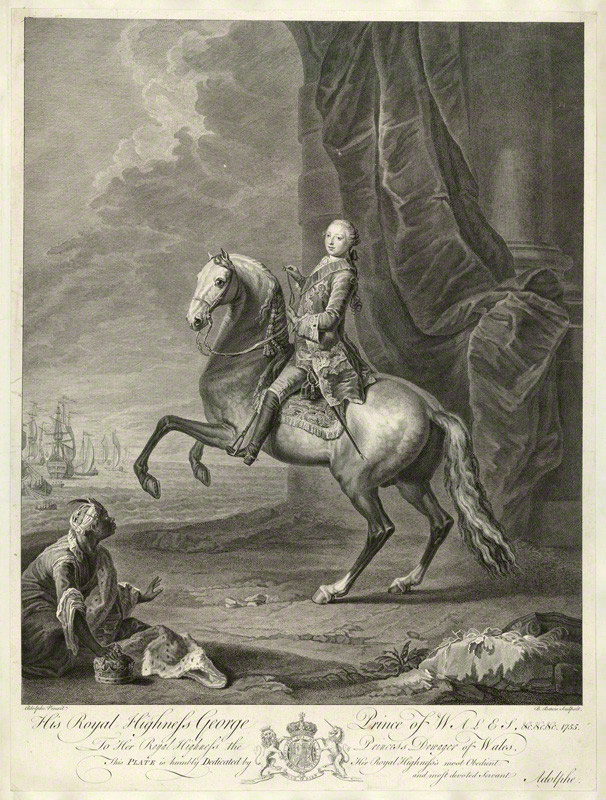
King George III refused to see the petition, instead declaring the colonies to be in a state of rebellion and accused them of waging war against the British Empire.
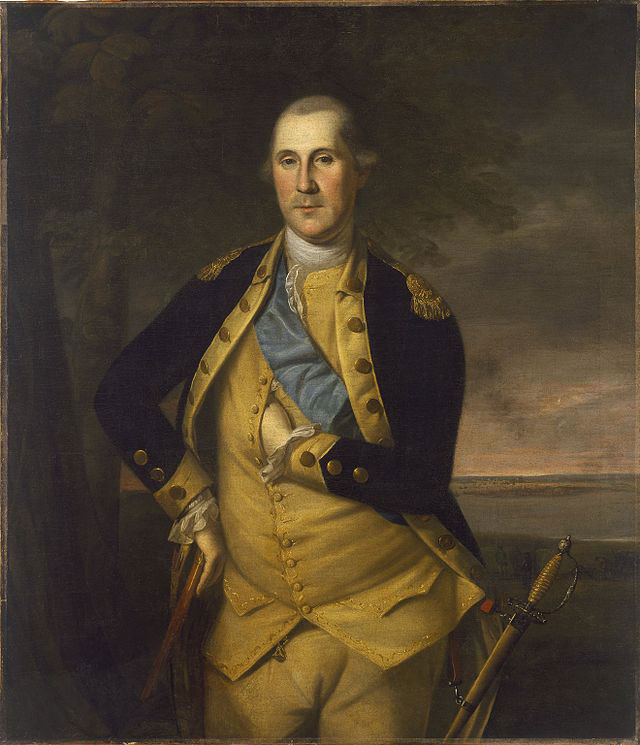
While some in the 2nd Continental Congress worked towards peace, many Delegates and their colonies prepared for war. During this Second Continental Congress, the Continental Army was established, and George Washington was appointed as Commander-in-Chief. This appointment was of great importance to the Congress. Several militias were gathering outside of Boston with no one to lead them. While brave, and with some military successes behind them, these forces lacked arms, ammunition, organization, and leadership. The hope was that under the leadership of a Commander-in-Chief, these forces would form a “Continental” army. Washington, ever the popular delegate, was the logical choice for this command. Virginia was the largest and wealthiest colony, and the Second Continental Congress sought a commander with significant combat experience. Very few had more experience than George Washington. Washington fought bravely during the Seven Years Wars (French and Indian War) and his appointment would likely be universally lauded and prove inspirational. Politically, with the prominent Virginian overseeing forces coming to the aid of Boston, would make the plight of Massachusetts the common cause of all of American colonies.
The Second Continental Congress would move to Baltimore in the winter of 1776-1777 to avoid capture by the British. In November of 1777 the 2nd Continental Congress passed the Articles of Confederation. These articles were an agreement amongst the thirteen colonies to serve as the first framework of a federal government. A main principle of these articles was the establishment of the sovereignty of the “states” and the organization of these emerging states into a loose political union. After just rejecting the rule of an overreaching king, the drafters of these articles feared similar overreach from within, and as such, sought to limit the new national government’s powers.
This limited power would later prove a challenge for the creation of the fledgling nation. Rather than being a document that firmly bound the states together, the Articles of Confederation were merely a framework that loosely connected thirteen independent republics. Congress debated these Articles of Confederation until Maryland became the last to ratify in 1781. The Articles of Confederation lasted as a relatively weak framework until the ratification of the United States Constitution in 1787, and with it, a much stronger federal government.
In 1778, the Second Continental Congress formed an important alliance with France. In a 1776 resolution, Richard Henry Lee of Virginia urged Congress to resolve to “take the most effectual measures for forming foreign alliances”. American diplomats Benjamin Franklin, Silas Deane, and Arthur Lee negotiated in France on behalf of the American colonies. Ultimately, both sides came to the agreement that neither the United States nor France would seek peace with Great Britain until the independence of the United States of America was recognized. With this treaty France agreed to provide financial and military support to the Americans. In turn, the United States would provide defense to France should Great Britain attack. This alliance would prove key in assisting the American military to secure victory over Great Britain.

The Declaration of Independence
The most significant achievement of the 2nd Continental Congress is largely considered to be the signing of the Declaration of Independence.
On June 7, 1776, Virginia delegate Richard Henry Lee put forth a resolution for independence. John Adams of Massachusetts seconded the motion.
Resolved, That these United Colonies are, and of right ought to be, free and independent States, that they are absolved from all allegiance to the British Crown, and that all political connection between them and the State of Great Britain is, and ought to be, totally dissolved. That it is expedient forthwith to take the most effectual measures for forming foreign Alliances. That a plan of confederation be prepared and transmitted to the respective Colonies for their consideration and approbation.
Up until this point, the focus of the Congress had largely been a hopeful restoration of the colonists’ rights as Englishmen. Few publicly advocated for independence from Great Britain. The sentiment of American independence was one that could bring about seismic change.
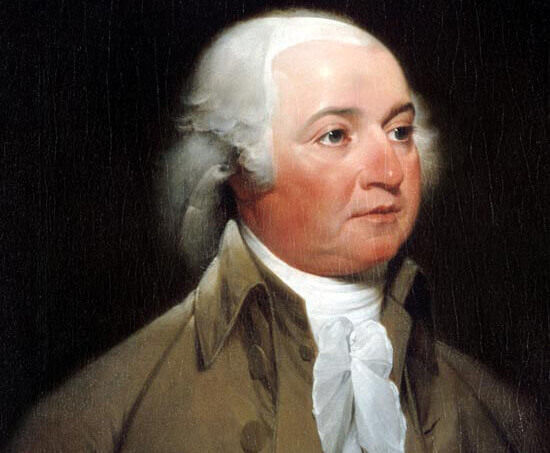
Initial voting on the matter was postponed while the delegates debated the issue. During this time a committee of five men was appointed to draft a document declaring American independence. This committee was made up of John Adams of Massachusetts, Benjamin Franklin of Pennsylvania, Thomas Jefferson of Virginia, Roger Sherman of Connecticut, and Robert R. Livingston of New York. Thomas Jefferson did the bulk of the work drafting the document.
Another committee of five was appointed to draft the beginnings of what would ultimately become the Articles of Confederation. This committee was made up of John Dickinson, Benjamin Franklin, and Robert Morris of Pennsylvania, John Adams of Massachusetts, and Benjamin Harrison V of Virginia.
After much debate, on July 2, 1776, the Second Continental Congress voted to adopt this resolution. The next day, Massachusetts delegate John Adams would write:
That same day, Adams would write another letter continuing this sentiment:
While John Adams would assume correctly that the eventual signing of this Declaration of Independence would indeed be celebrated with pomp and circumstance, Congress would debate the wording of this document for two more days. Finally, on July 4, 1776, the Second Continental Congress would finally vote to approve and adopt this Declaration of Independence.
A little less than one month later the people of Boston would hear the Declaration of Independence read aloud for the first time. Abigail Adams would describe the joyful scene in a letter:
What did the 2nd Continental Congress do?
The 2nd Continental Congress was a meeting of delegates from the Thirteen American Colonies that oversaw these colonies as a de facto governing body. Ultimately the Second Continental Congress would establish a Continental Army, debate and adopt the Declaration of Independence, draft and adopt the Articles of Confederation, secure an alliance with France, begin the process of printing money, and conduct diplomacy with foreign governments.
Where was the 2nd Continental Congress held?
The Second Continental Congress was held in Philadelphia, Pennsylvania, Baltimore, Maryland, Lancaster, Pennsylvania, and York, Pennsylvania.
How many delegates were at the 2nd Continental Congress?
56 men attended as delegates at the Second Continental Congress. 50 of these 56 men would eventually sign the Declaration of Independence.
What was the purpose of the Second Continental Congress?
The purpose of Second Continental Congress was to allow for the 13 British colonies to meet and debate the ongoing crisis in their relationship with Great Britain and Parliament. The hopeful goal was to seek a resolution to this crisis, while also preparing for war should a resolution not be found. Congress met to discuss the urgency of defending the colonies, work to find resolutions to ongoing taxation without representation and the restoration of colonial rights, and prepare for future hostilities by appointing a commander-in-chief and creating a Continental Army.

Sign up to receive special offers, discounts and news on upcoming events.