In-Season Hours: Tours begin at 10a, last tour 5p. Plan Visit >
John Adams Presenting the Declaration of Independence

Declaration of Independence, 1819, John Trumbull, Oil on Canvas

10 Causes of the American Revolution

No singular cause led to the American Revolution. Instead, the causes of the American Revolution can be found in years of political intrigue, protest, and unrest. In the simplest of terms, the American Revolution was the result of long-standing disagreement over how Great Britain should govern the American Colonies. Over the span of years this tension would grow from a disagreement to all out war.

#10 Geography and Timing

The American Revolution took place during a time referred to as the “Age of Enlightenment”; a time where statesmen, thinkers, and artists, began to think more critically about fundamental parts of society, and discussed ways of seeking systemic change. The Kingdom of Great Britain ruled a wide and sprawling Empire, often leaving its subjects a vast distance from the center. With an ocean between them, the distance between North America and Great Britain would initially lead to the idea of “salutary neglect”. Following the adoption of the Massachusetts Charter of 1691, the colonists were largely allowed to manage their own affairs. Under this unofficial policy, royal authorities seldom interfered with the daily governing of the British North American Colonies. Though acts were passed that affected the British colonies as a whole, many regulations were not strictly enforced, and some were outright ignored. During the time of this unofficial policy, the British North American colonial legislatures were empowered to autonomously rule their provinces on behalf of the Crown. Once this policy was lifted, conflict eventually arose. This conflict would become one of the main causes of the American Revolution.

#9 British Parliament and the Crown

The Parliament of Great Britain was seemingly unrelenting in the mid-18th century when it came to establishing unpopular policies in the years leading up to the American Revolution. For years the American colonists had been taxed by Parliament without their consent. Perhaps the tensions between the American colonies and Great Britain could have been avoided, to some degree, had the American colonists received equal representation under English law. Nevertheless, this “taxation without representation” would lead to widespread unrest in the American colonies and would become one of the main causes of the American Revolution. The Stamp Act was the first direct tax levied upon the colonies, requiring a stamp to be placed on paper goods such as newspapers, legal documents, bills of sale, and diplomas. This was followed by the Declaratory Act which ended the unofficial policy and “Salutary Neglect” and reasserted Parliament’s political dominance in the American colonies. The Townsend Acts and Tea Act would follow.

#8 An Overextended British Military

From 1754-1763, Great Britain was involved in the “French & Indian War”. This is the name given to the North American theater of the “Seven Years War”; a massive global conflict that was fought across three continents. The conflict in North America would begin over competing land claims made by both the British and French empires. Many in the colonial military leadership would get their first experiences in combat during this conflict, including George Washington. The war in North America would last until the Treaty of Paris was signed in 1763, marking the end of the conflict. Following the war, the British treasury was left with a massive war debt. Although denied equal representation in Parliament, the American colonies were taxed in an attempt to offset this war debt. The unrest surrounding this “taxation without representation” would become one of the main causes of the American Revolution.

#7 The Navigation Acts

Unjust Parliamentary taxation would ultimately become one of the main causes of the American Revolution. While much has been made of the importance of the Stamp Act, Townshend Acts, and Tea Act as central causes of the American Revolution, this unjust taxation has its roots as far back as the 17th century. The Navigation Acts of 1651 served as a way to restrict colonial trade to England, making the British monarchy the only lifeline for the American colonies, and ensured that Great Britain would benefit from the rich resources that the American Colonies could provide. Specifically, the Navigation Acts declared that only English ships would be allowed to bring goods into England, and that any goods produced in the North American colonies, if exported, must be exported to Great Britain. These Navigation Acts would become one of the longer-standing economic causes of the American Revolution and would create tensions between the British government and the Dutch who the colonists began trading less with due to the strict regulations. Although legal trade still existed between the two, the import duties were considerably high. Goods such as sugar, tobacco, and molasses were given additional duties, driving many to begin smuggling these goods into the colonies. Smuggling prompted renewals of, and changes to, the Navigation Acts through the years and the passage of new laws meant to inhibit smuggling in the American colonies. Years later, the Navigation Acts would also play a critical role in the timing of the Boston Tea Party, which is also considered to be one of the causes of the Revolutionary War.

#6 The Writs of Assistance

In 1761, Massachusetts lawyer, James Otis, made a name for himself arguing against the Writs of Assistance. The Writs of Assistance were general search warrants that gave Crown-appointed agents the ability to search private homes and establishments without probable cause or permission. Colonial reaction to these new laws was extremely negative and could certainly be considered as one of the main causes of the American Revolution. Otis was asked by those arguing against the Writs of Assistance to make an impassioned speech on the subject. It is said that his speech was a galvanizing moment for resistance to British authority. Otis would call the Writs of Assistance “The worst instrument of arbitrary power, the most destructive of English liberty and fundamental principles of law, that ever was found in an English law-book”. John Adams would later remark that, ‘then and there the Child Independence was born”. With one powerful speech, James Otis lit a spark that would be come one of the causes of the American Revolution.

#5 An Increased Sense of American Identity

In the initial years leading up to the American Revolution, the Sons of Liberty, and those arguing against Great Britain’s treatment of the American colonies, petitioned for equal representation under English law. With the effort largely centered around issues of “taxation without representation”, there was initially little consideration for a total separation from Great Britain. However, as tensions grew following events such as the Boston Massacre and the Boston Tea Party, as well as the passage of the Coercive Acts, ideas of American independence began to spread. One of the key causes of the Revolutionary War would be Parliament’s punishment of Boston following the Destruction of the Tea in 1773. The Coercive Acts, or “Intolerable Acts” as they would be called, would inspire outrage across the colonies and lead to a growing sense of the “common cause of America”. This sense of an American identity would become one of the main causes of the American Revolution.

Portrait of Thomas Paine
Portrait of Thomas Paine, 1792, Laurent Dabos, Oil on Canvas, National Portrait Gallery

#4 “Common Sense” by Thomas Paine

“Common Sense” was a pamphlet written by Thomas Paine in 1776. Similar to James Otis’ impassioned speech years earlier, this impactful essay would eventually be considered one of the causes of the Revolutionary War. It made a straightforward argument for the independence of the American colonies by claiming that the British monarchy was tyrannical and corrupt. Essentially, Paine laid all of the problems in Colonial America at the feet of corrupt politicians in Parliament and those responsible for British rule. Additionally, he suggested that the only true solution would be colonial independence. The pamphlet was immensely popular on both sides of the Atlantic, selling over 500,000 copies in its first year of publication, and its successfulness of making a clear and persuasive argument for starting the fight for American independence makes Paine’s work one of the most significant causes of the American Revolution. Before the English-born Paine published “Common Sense,” the accomplished writer was an early manager of one of the most successful colonial magazines, Pennsylvania Magazine.

#3 The Boston Massacre

One of the main causes of the American Revolution was The Boston Massacre, which took place on March 5, 1770. This historical event was a prime example of both the abuse of power by British soldiers in the American colonies as well as the importance of media portrayals in the causes of the Revolutionary War. Tensions had been building between British Regulars and the citizens of Boston following the death of Christopher Seider, a young boy who was inadvertently killed during a tax protest a few weeks prior. During this riot, a mob of men and boys gathered outside the shop of “importer” Theophilus Lillie. Ebenezer Richardson, a customs informant, tried to break up the crowd, which in turn focused their ire on Richardson. He was chased back to his home, where Richardson barricaded himself within. The crowd grew in size and demanded Richardson come out and face the mob. During the riot outside his home, Richardson was seen in the window with a musket, fired “swan shot” in the air, wounded Samuel Gore in the thigh and finger, and killed the 11-year-old, Christopher Seider. Following Seider’s burial tensions remained extremely high.

The Bloody Massacre Perpetrated in King Street Boston on March 5th, 1770, Paul Revere, Hand-colored engraving, Yale University Library

On March 2, 1770, ropemaker Samuel Gray got into a brawl with several soldiers looking for extra work at John Gray’s Ropewalk. This intermittent brawl went on for 3 days and nights between Boston’s gangs and the soldiers. Two days later, Wigmaker’s apprentice, Edward Gerrish accused a British officer, Capt. John Goldfinch, of not paying for his services. Gerrish shouted to Goldfinch “there goes that fellow who hath not paid my master for dressing his hair.” Goldfinch continued on his way and ignored Gerrish’s shouts.

Private Hugh White, a sentry at the Customs house and member of the 29th Regiment chimed in defending Goldfinch. Some words were exchanged between White and Gerrish, and White struck Gerrish on the side of the head with the butt of his musket. According to his deposition, Gerrish cried out, a few other apprentices came to Gerrish’s aid, and they began to hurl both epithets and snowballs at White. Hearing the noise, a crowd began to form. Other soldiers arrived on the scene, led by Captain Thomas Preston. With the knowledge that the mob could turn violent at any moment, Preston ordered the guard to turn out, go to Kings Street, and load their muskets. A club was thrown from the crowd, hitting Private Hugh Montgomery, knocking him down. Montgomery’s musket discharged. The other soldiers subsequently fired their muskets into the crowd, striking 11 individuals. Three people died on the scene: Crispus Attucks, Samuel Gray, and James Caldwell. Samuel Maverick died a few hours later, and Patrick Carr succumbed to his injuries two weeks later, bringing the traditional total of deaths to 5.

After the muskets went off, Preston sent the men back to the guard house. Hutchinson dispersed the crowd from the State House window stating, “The law shall have its course, we shall live and die by the law”. By 2 am, the sheriff detained Capt. Preston. An enormous funeral service was held for the victims, and Christopher Seider was reburied along with them.

Ironically, it was John Adams, eventual leader of the Revolutionary cause, who ultimately defended the soldier in court. Six of the soldiers were acquitted and two found guilty of manslaughter. It took very little time for the Sons of Liberty to use this event to further the Patriot cause. Paul Revere is often credited as creating a famous engraving depicting the Boston Massacre. This image, however, was copied from an earlier image created by Henry Pelham. Both images depict a bloody scene on King Street, and furthered resentment and anger toward the British troops in Boston. This event would become one of the major causes of the American Revolution.

#2 The Boston Tea Party

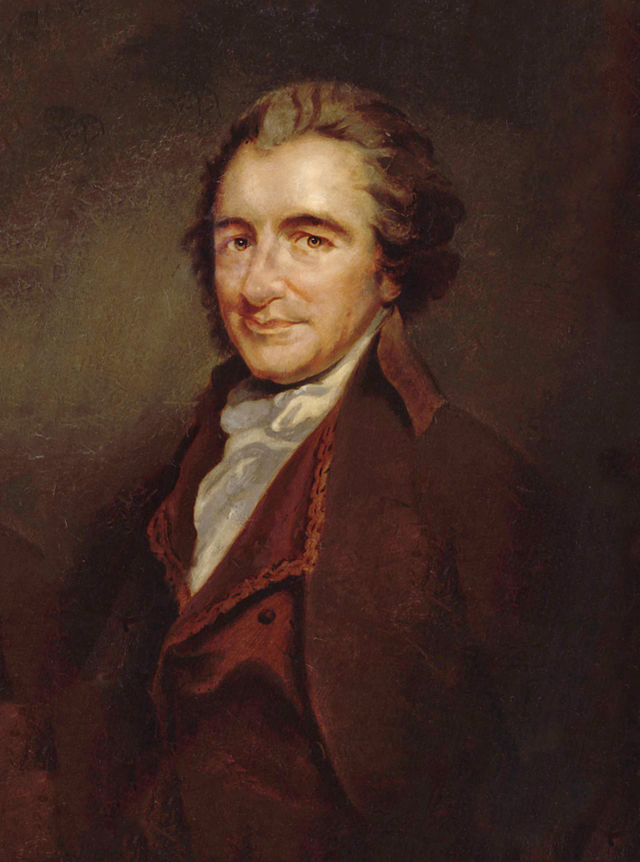
The Boston Tea Party is considered by many to be one of the main causes of the Revolutionary War. It was a catalytic event that deepened the growing divide between Great Britain and her American colonies. The event itself was the culmination of a series of tense meetings and negotiations involving the Sons of Liberty, tea consignees, and the meetings of the Body of the People that played out over multiple weeks. For yearsz, a conflict had been building between Parliament and the American Colonies regarding Parliament’s authority over the colonies. The Tea Act of 1773 gave new life to the debate. Under the law, the East India Company could sell tea to America at a lower price than any competitors. The cheap tea would encourage people to buy it, and thus give legitimacy to the American tea duty of 3-pence per pound. Patriots feared what they saw as an East India Company monopoly, as well as another tax without their consent. Boston’s Patriots demanded that the ship’s owners return the tea to England without being unloaded, but also began to plan their response should government officials refuse their demands. Ultimately customs officials and the governor claimed it was out of their authority to allow the tea to leave unless the tax was paid on it. On December 16, 1773, seeing no other options, approximately 100-150 men boarded the vessels Dartmouth, Eleanor and Beaver docked at Griffin’s Wharf, and destroyed 340 chests of East India Company tea. During 3 to 3 and a half hours, over 92,000 lbs. of tea was destroyed, valued at approximately $1.5-$1.8 million in modern currency. The participants of the Boston Tea Party came from all classes of Boston society. Many were skilled tradesmen, and their younger apprentices, while others appeared to be men of prominent social standing, such as merchants and doctors. Some were loosely disguised, while according to several 1st person accounts, many wore no disguise at all. These ordinary citizens performed an extraordinary act, and many participants would go on to fight for American independence. Parliament’s reaction to the Boston Tea Party would likewise become one of the causes of the Revolutionary War. Only 16 months would pass between the Destruction of the Tea and the “shot heard round the world” at the Battles of Lexington and Concord, marking the beginning of the American Revolution. The Destruction of the Tea would be described by John Adams as “The most magnificent movement of all,” and would forever more be considered one of the leading causes of the Revolutionary War.

#1 Taxation Without Representation

This “spark” Adams references would eventually ignite a revolution. Parliament’s consistent taxation of the American colonies, while simultaneously denying its citizens equal representation in their own government, is perhaps the most important of all the causes of the American Revolution. Many in the colonies felt that this “taxation without representation” was a denial of their most basic rights as British citizens.
In an essay written just before the outbreak of the American Revolution, John Adams would write:

“Human nature itself is evermore an advocate for liberty. There is also in human nature a resentment of injury, and indignation against wrong. . . These amiable passions are the latent spark.”

If the American colonists were expected to pay taxes as Englishmen, and to fight in the French & Indian War as Englishmen, then they believed that they deserved the same basic rights as Englishmen. This point was clearly supported by the Magna Carta of 1215 which stated that subjects of the Crown “should not be compelled to contribute to any tax, tallage, aid, or other like charge not set by common consent in Parliament.” Many felt that the denial of this consent was an infringement upon the colonists’ natural rights. The many protests against this unjust taxation would require significant action and would become perhaps the most significant of the causes of the American Revolution. Resentment among the general population grew significantly with the passage of each tax and each example of Parliamentary intrusion into daily life. Eventually, this taxation without representation would lead to major hostilities and a buildup of tension and resentment that would grow too far to recede.
“If the people are capable of understanding, seeing, and feeling the differences between true and false, right and wrong, virtue and voice, to what better principle can the friends of mankind apply than to the sense of this difference?”

-John Adams, The Novanglus, 1775

FAQs

How did the American Revolution begin?

The American Revolution officially began on in April of 1775 when the Colonial militia and British military exchanged gunfire for the first time during the Battles of Lexington and Concord.

Which countries fought on the side of the colonies during the American Revolution?

What the Americans had in spirit, vision and will to be free, they lacked in funding, manpower and a navy. However, thanks to the support of the French and Spanish, the American colonists were able to bridge those gaps. Bad blood between Britain, France and Spain worked to the colonists’ advantage and could be seen as one of the main causes of the American Revolution. The French navy played a major role in the eventual British surrender at Yorktown.
How was the American Revolution a civil war?

The vast majority of the American military’s leadership had accrued relevant experience as members of the British army. George Washington was a well-respected military officer in the British army before he was the general of the American forces, and eventually the first president of the United States of America. This made the American Revolution, in the eyes of the British, an act of disloyalty among the ranks, and a civil war.

What happened during the American Revolution?

During the American Revolution, Great Britain’s 13 American colonies took up arms against the Crown and fought to establish the sovereign United States of America. Fighting took place in many ways: in the media, in the markets, and on the battlefield. Over the course of the Revolutionary War, 6,800 Americans lost their lives, 6,100 were wounded and more than 20,000 were taken prisoner.

Boston Tea Party Ships & Museum Profile Picture

Boston Tea Party Ships & Museum

This page was developed with the help of one of our great cast members here at the Boston Tea Party Ships & Museum®.

SIGNUP FOR SPECIALS & DISCOUNTS

Sign up to receive special offers, discounts and news on upcoming events.