Voted #1 “Best
Patriotic Attraction”
USA Today
Relive American History
At the Boston Tea Party Ships & Museum, you can be a part of the famous event that forever changed the course of American history through a multi-sensory experience that includes live actors, interactive exhibits, and full-scale replica 18th-century sailing vessels!
Museum Experience
Re-enact the Event that Started a Revolution
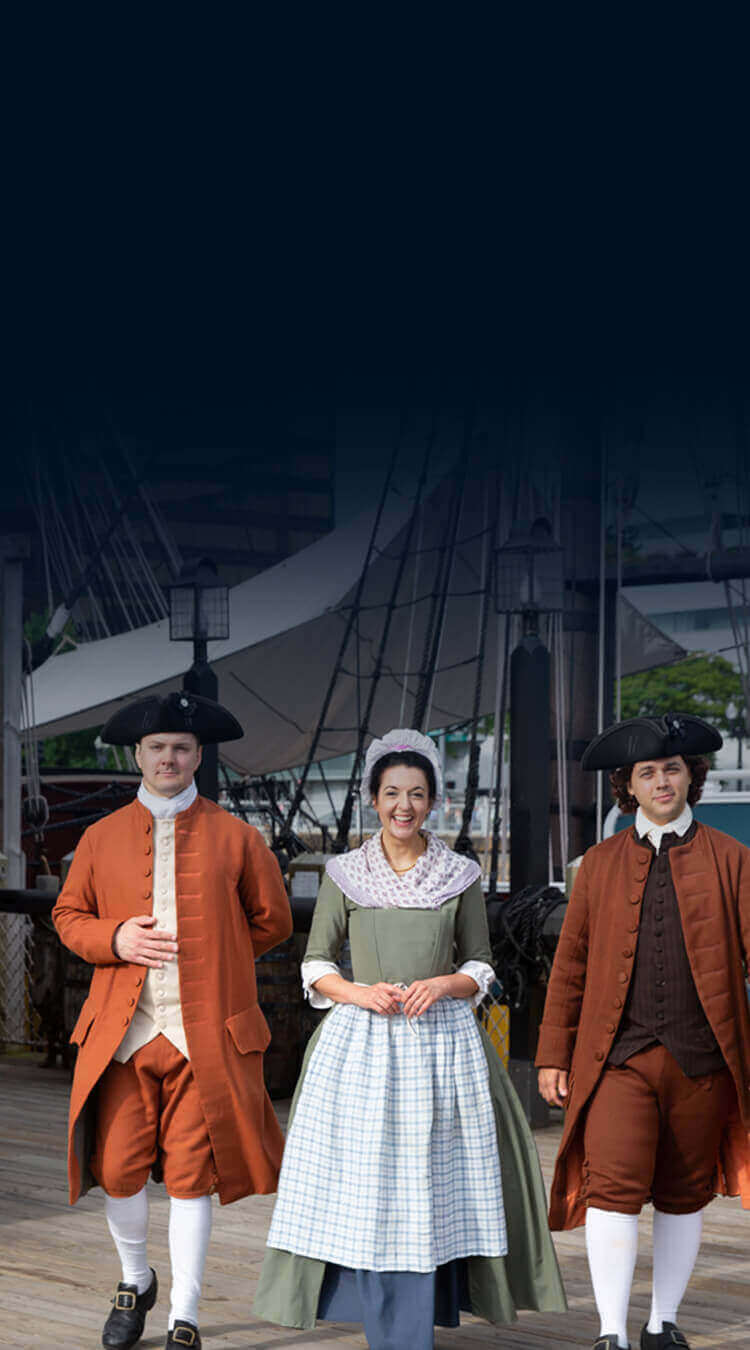
Historical interpreters, interactive exhibits, full-scale replica 18th-century sailing vessels, and historic artifacts, are just some of what you’ll experience during your visit.
Scroll to explore, or use our interactive map.
Ticketed museum experience includes sections 1-5, and cannot be toured separately. Sections 6 & 7, the museum gift shop and Abigail’s Tea Room, are open to the general public without a museum ticket.

1
Museum
Experience
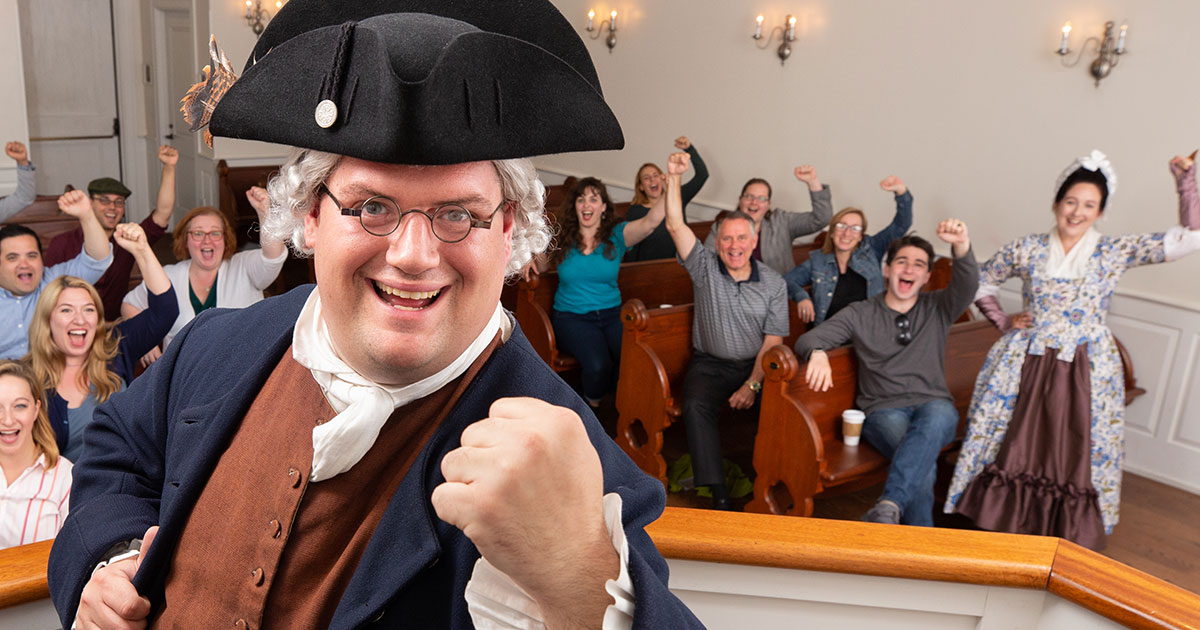
The Meeting House
Join the Sons & Daughters of Liberty on a rendezvous with history! Enter the meeting house and step back in time to rebellious 1773 Boston.
2
Museum
Experience
Tea Party Ships
Storm aboard one of our two Tea Ships, the brig Beaver or ship Eleanor, and join a Son of Liberty as you take part in the “Destruction of the Tea!”
GW
Museum
Experience
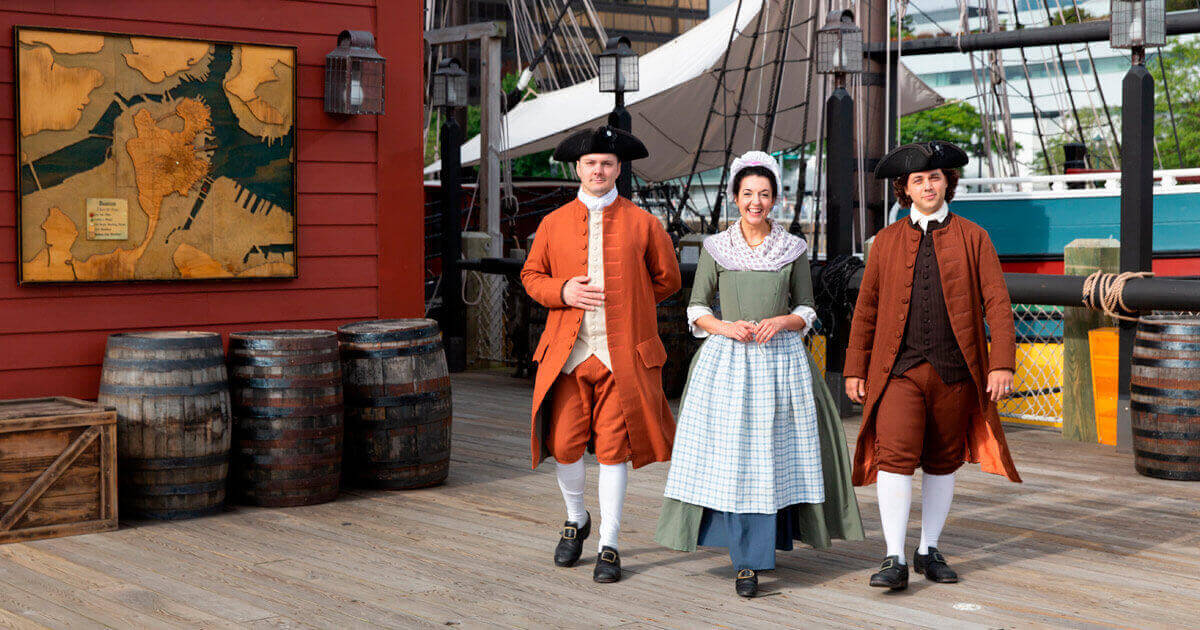
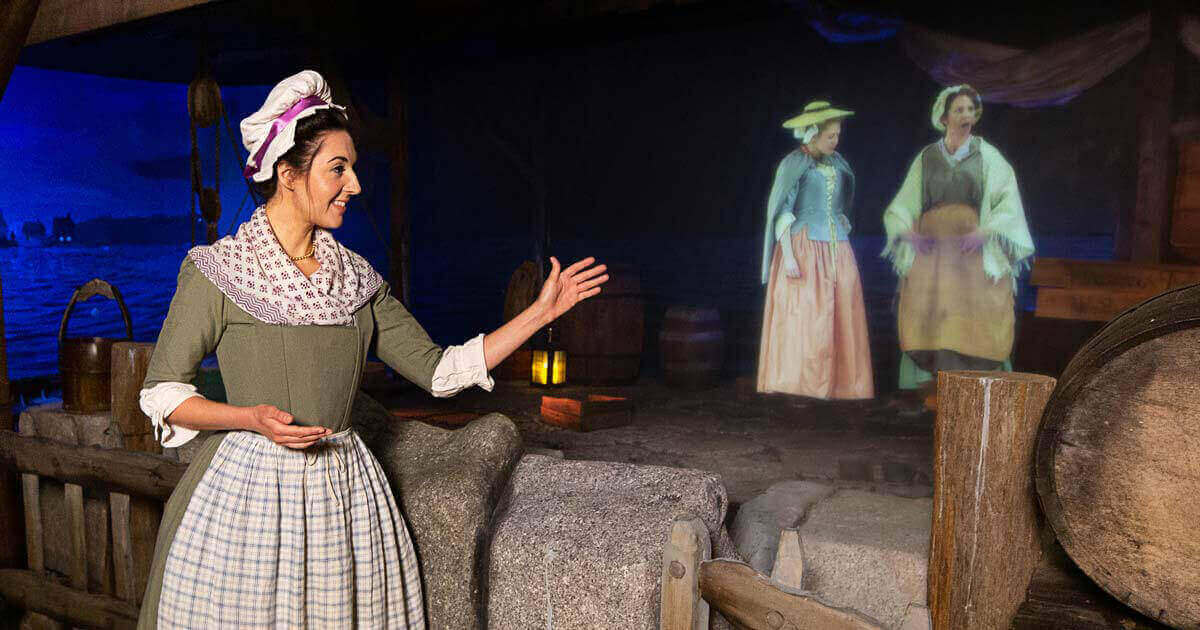
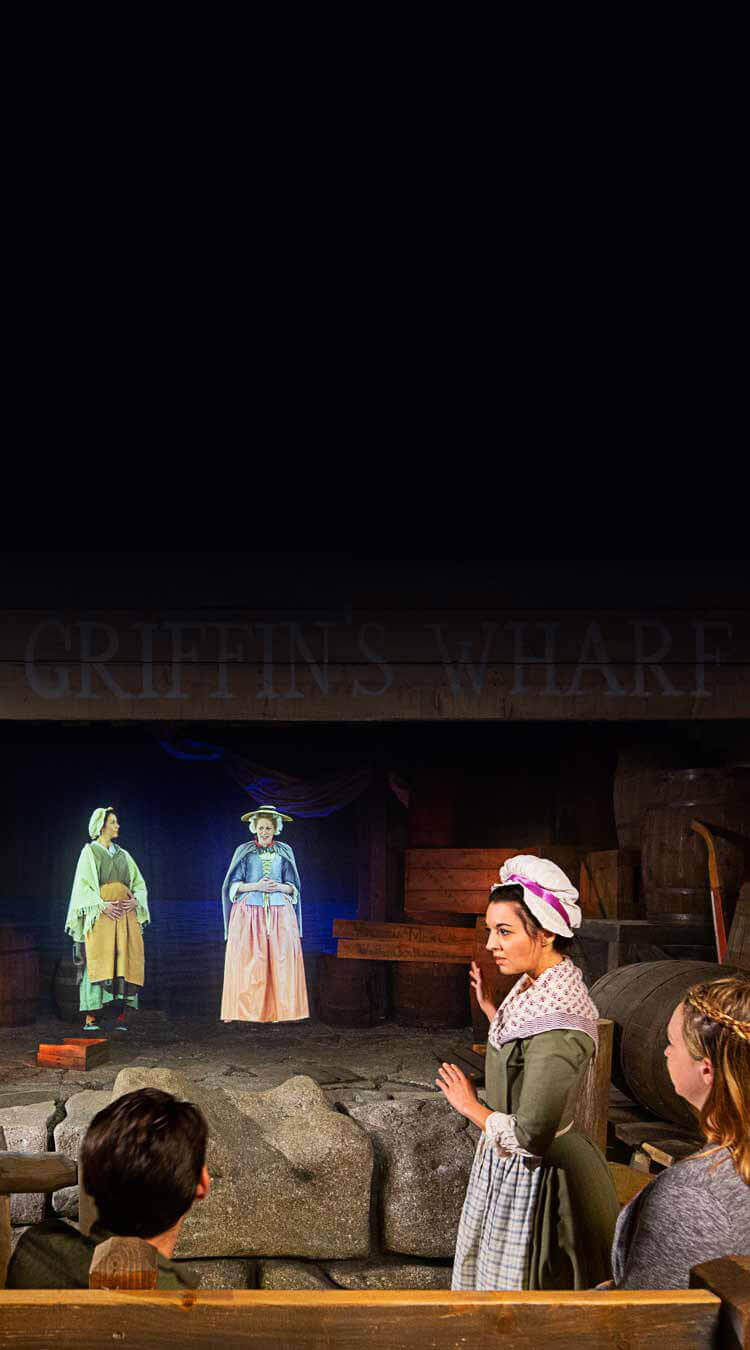
Griffin’s Wharf
Located on the same body of water where the Boston Tea Party occurred over two centuries ago.
3
Museum
Experience
Reenactment in 3D
Where 18th Century meets cutting edge technology! Experience the immediate debate firsthand and the potential ramifications for your bold actions.
4
Museum
Experience
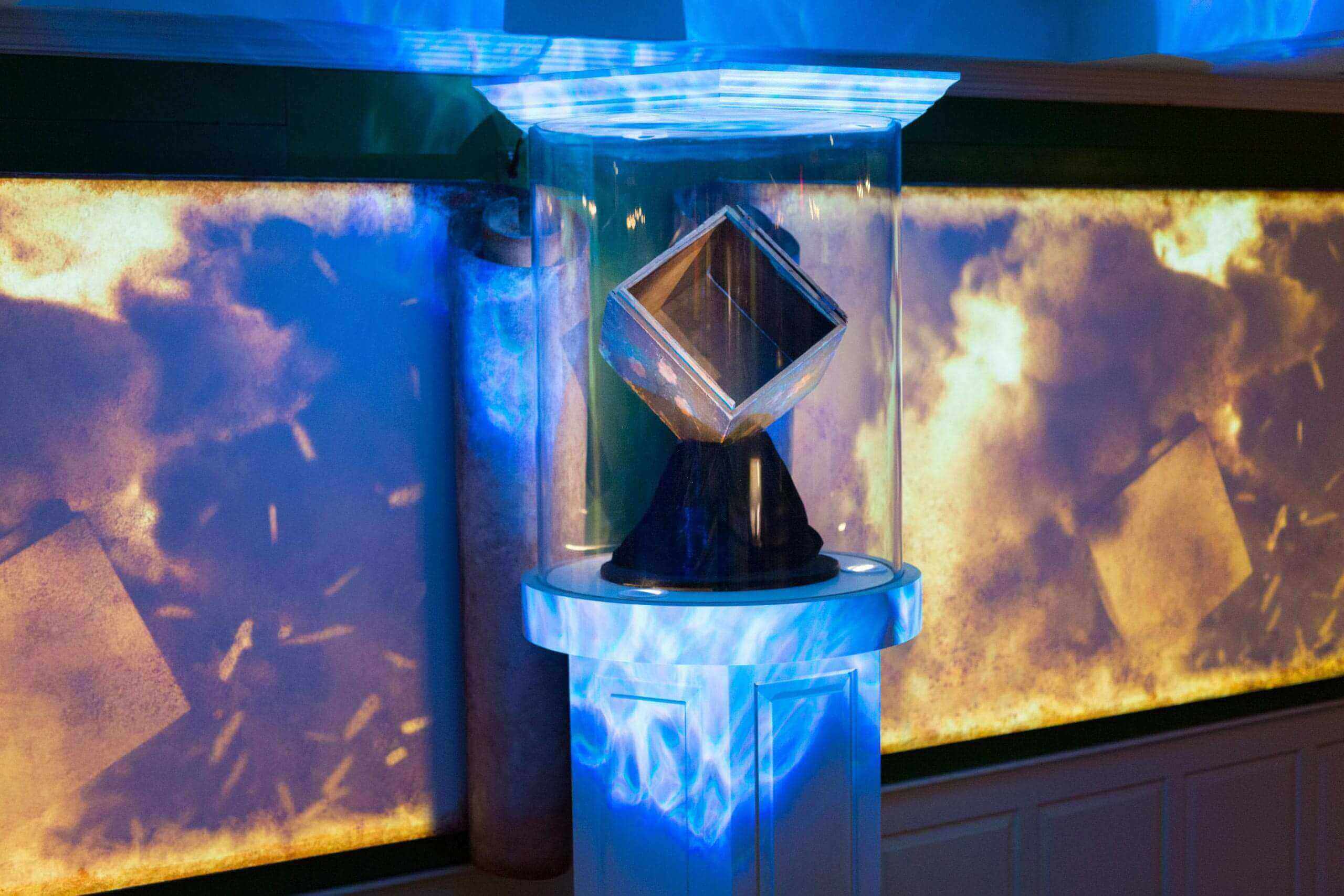
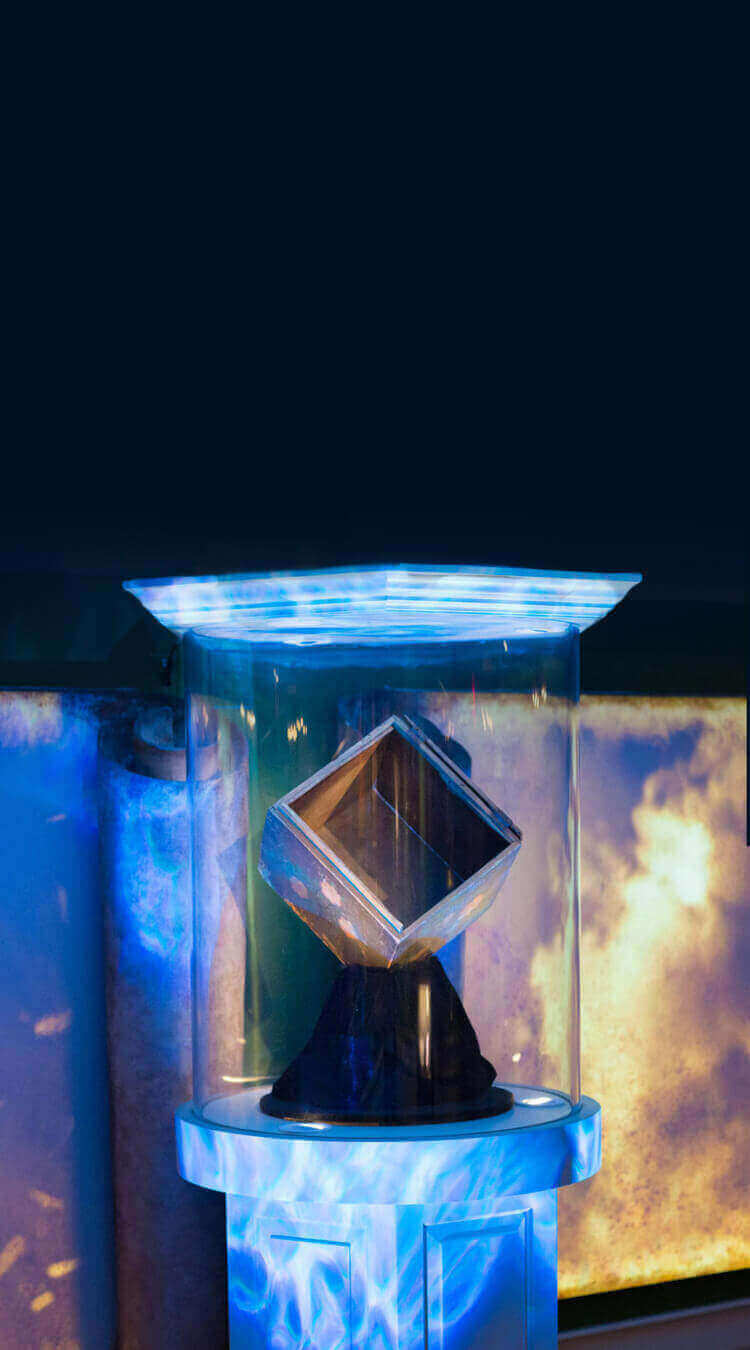
The Robinson Tea Chest
Protected and preserved for more than two centuries, the Robinson Tea Chest is the only known surviving tea chest from the Boston Tea Party.
5
Museum
Experience
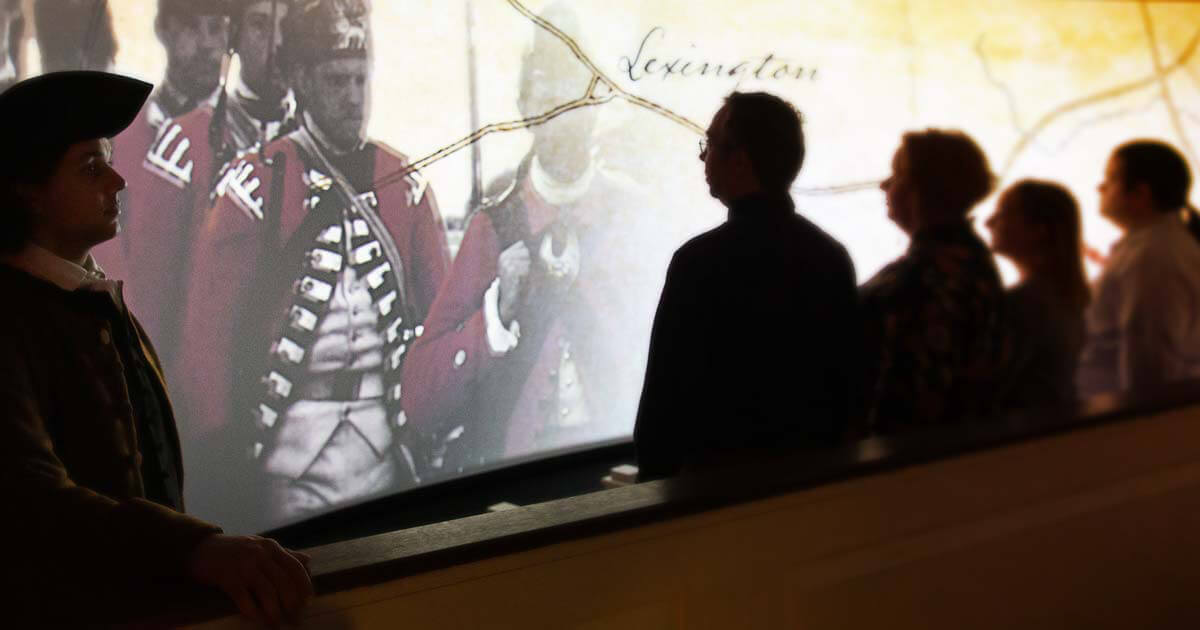
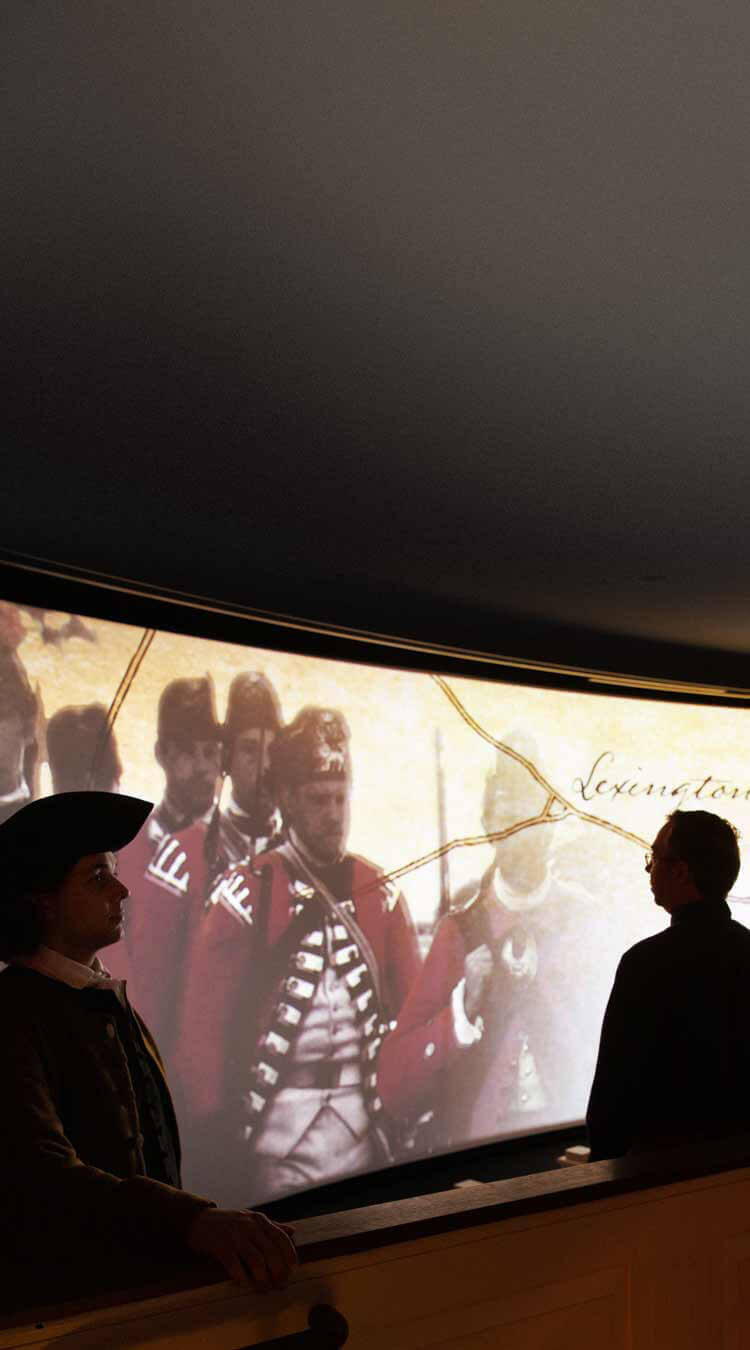
Minuteman Theater
Immerse yourself in our award winning multi-sensory film! Our documentary film, “Let it Begin Here” dramatically depicts the events of April 19, 1775 of Paul Revere’s midnight ride and the beginning of the American Revolution.
Let It Begin Here depicts the events of April 19th, 1775, which include a battle scene. It can be loud and intense for some. Museum tour Hosts will remain present should guests require assistance or exit.
6
Museum
Experience
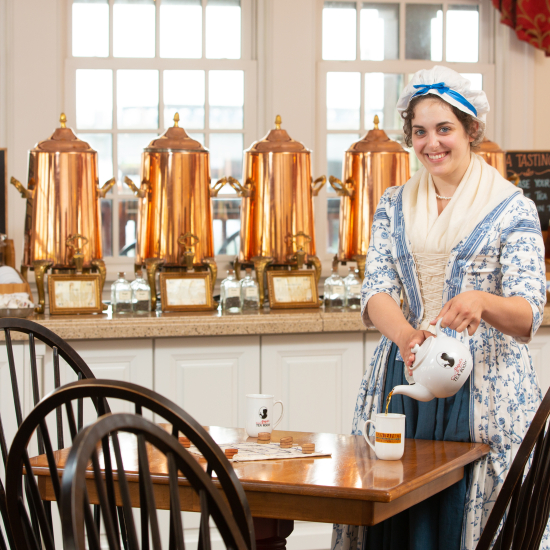
Abigail's Tea Room & Terrace
The comfortable charm of another era, wonderful waterfront and skyline views, a friendly welcome from colonial tea ladies and reasonably priced menu choices make Abigail’s the perfect place to pause for a relaxing break.
7
Museum
Experience
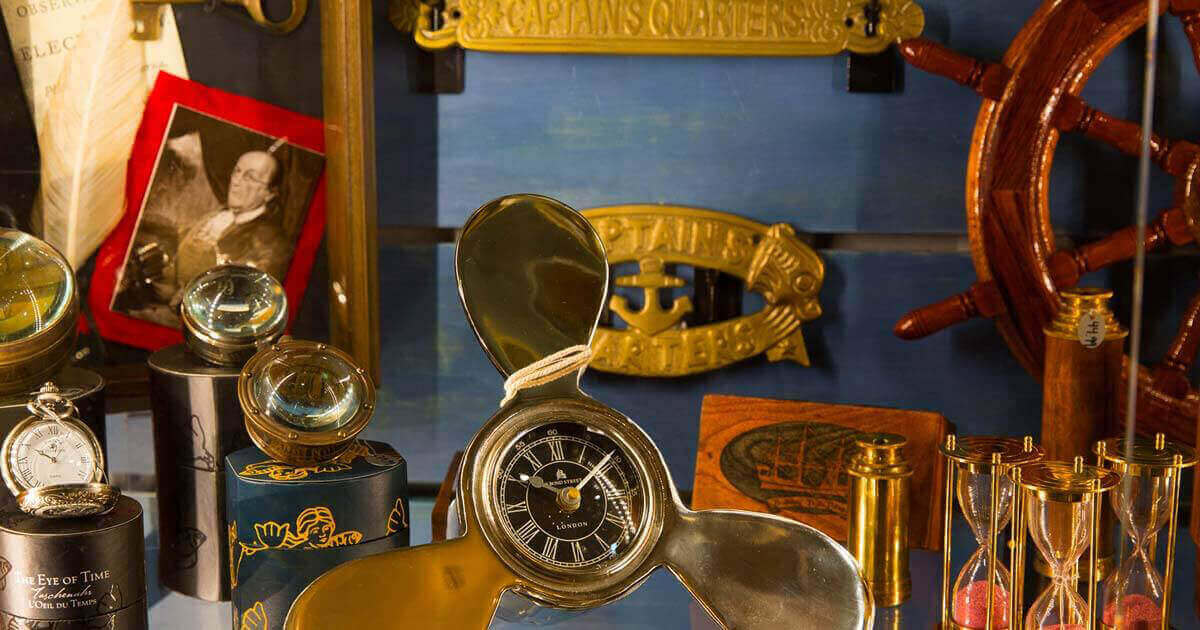
Gift Shop
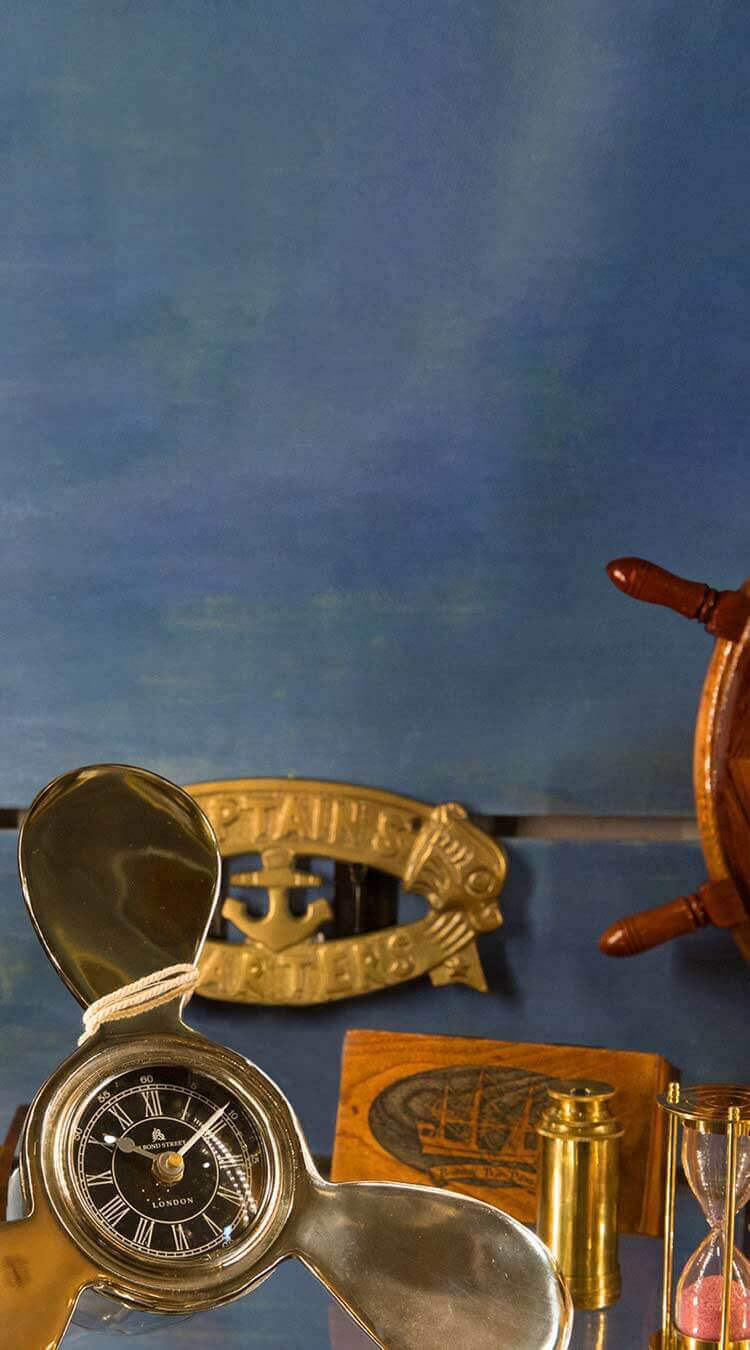
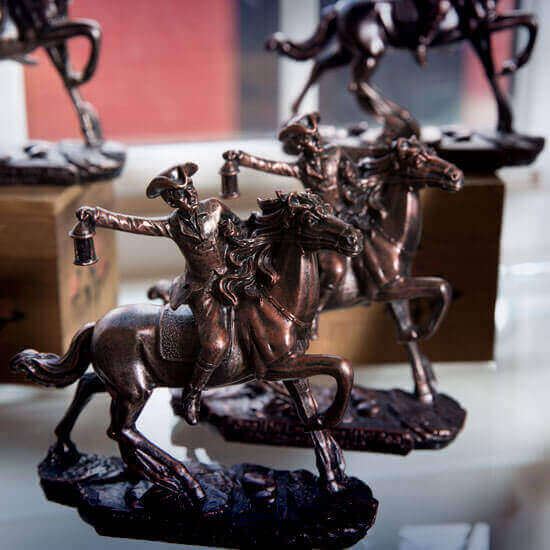
Bring home a bit of history in the form of an American Revolution souvenir from the Boston Tea Party Ships and Museum gift shop. Browse through an array of interesting gifts and collectibles and take home a special keepsake to remember your journey back to colonial America.
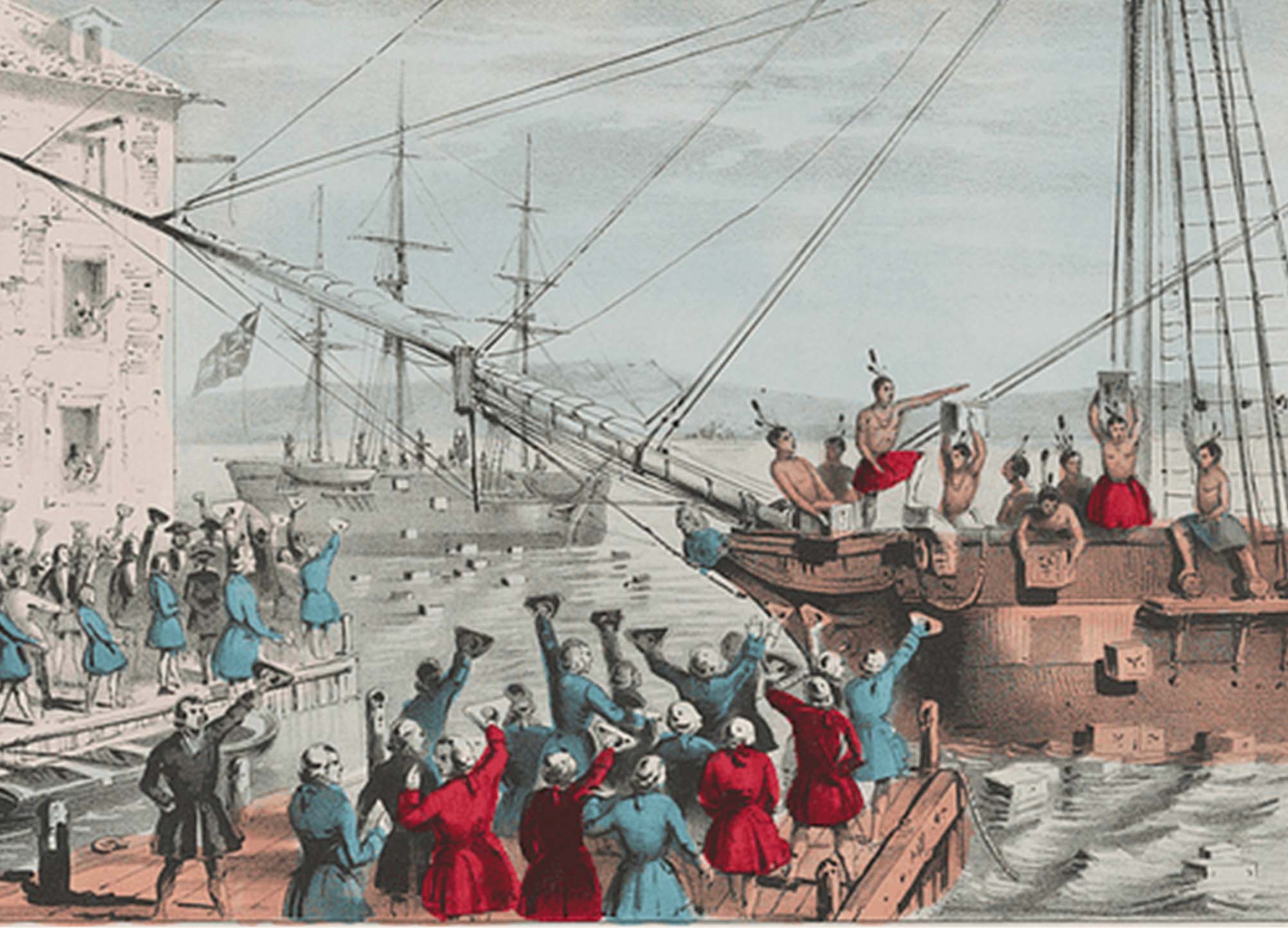
Boston Tea Party Descendants Program
In partnership with the New England Historic Genealogical Society.
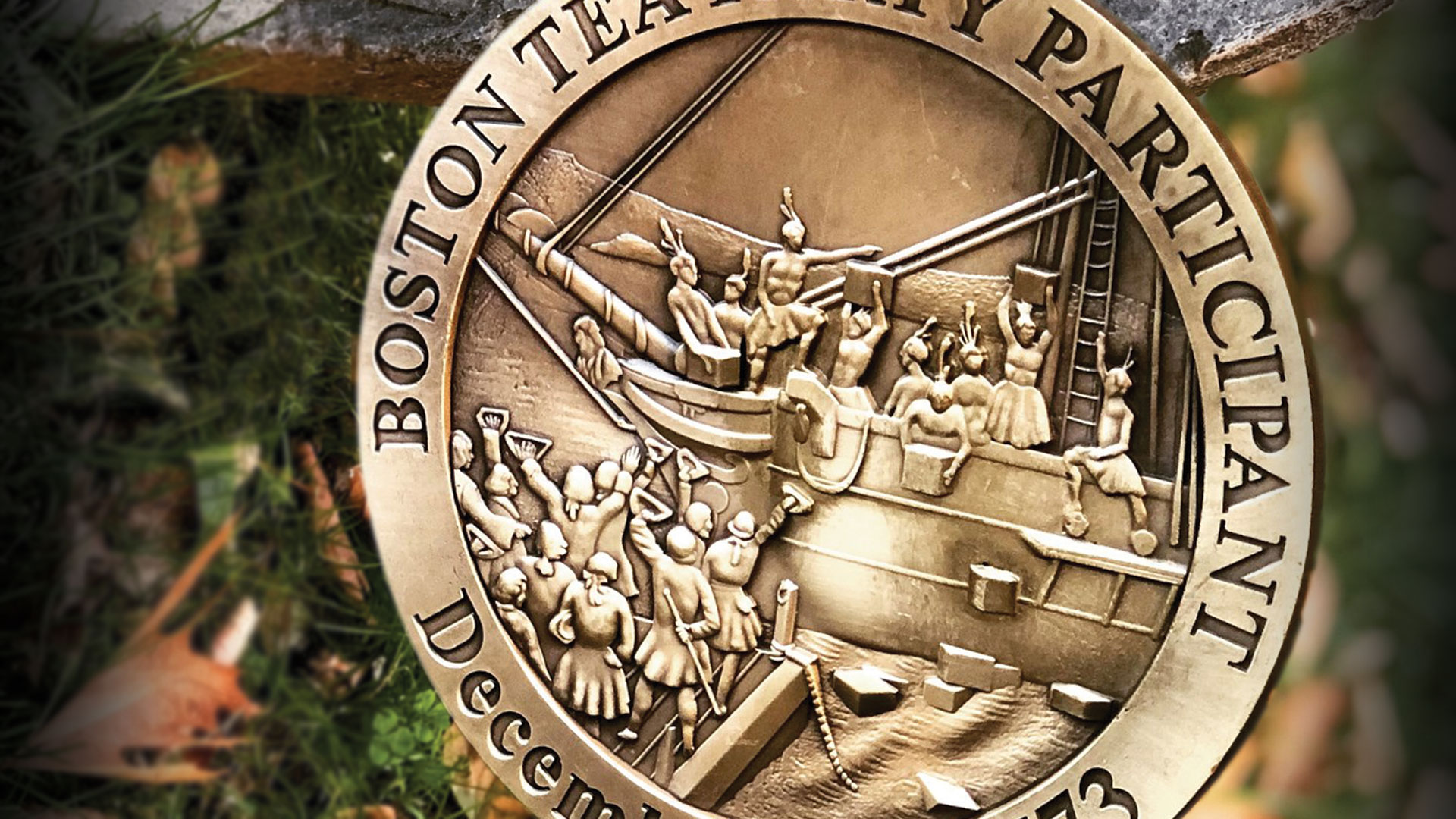
Grave Marker Commemorations
Honoring all who took part in the 1773 Destruction of the Tea.
Tickets & Packages
Boston Tea Party Ships & Museum General Admission
From
$35.00
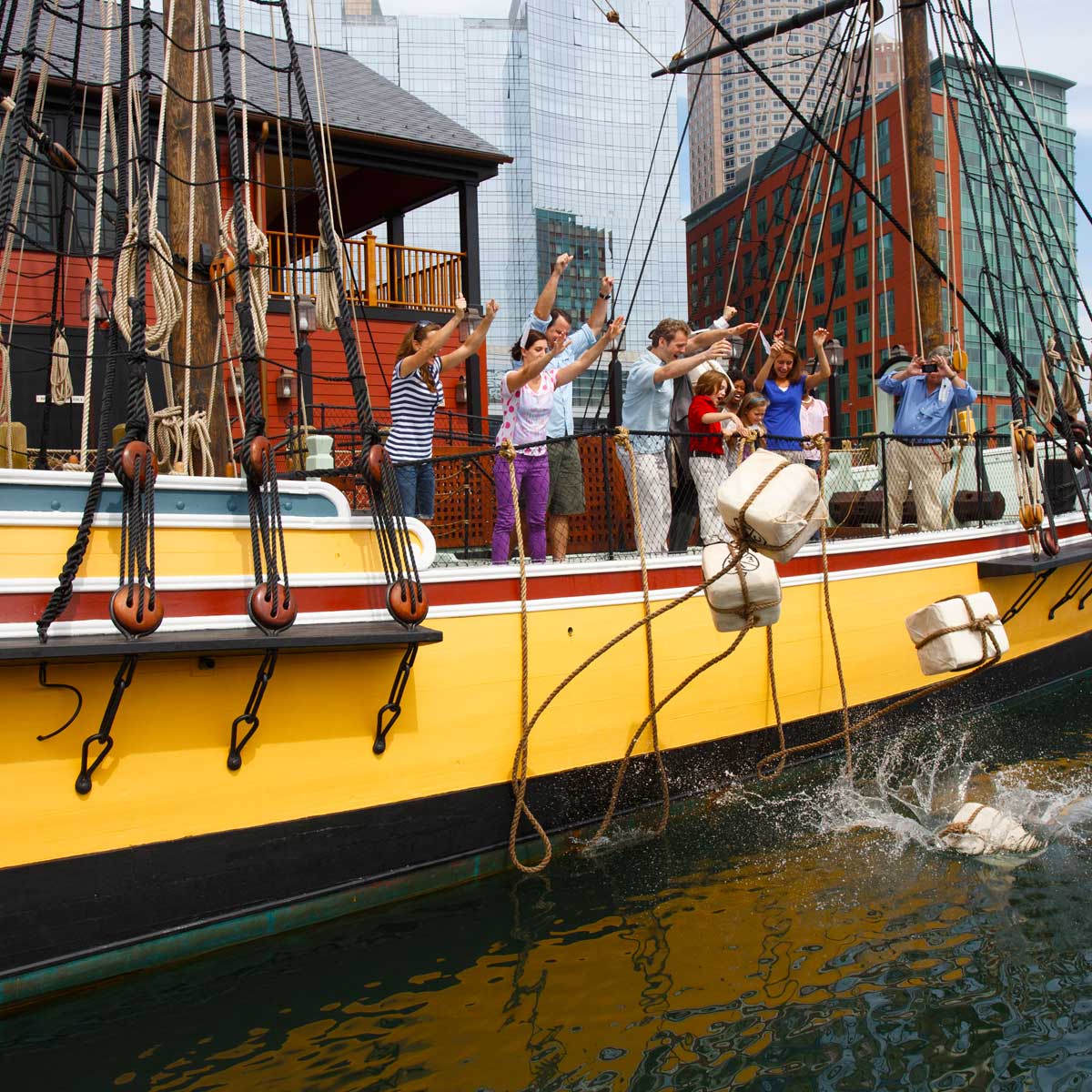
- A fully guided experience by costumed interpreters telling the story of that fateful night in 1773.
- A tour of an 18th century replica (restored) vessel.
- Dump the tea into the sea!
- View the Robinson Tea Chest: The only known surviving tea chest from the Boston Tea Party.
Boston Tea Party Ships & Museum + Old Town Trolley Tour Package
From
$80.30
Save up to 7%
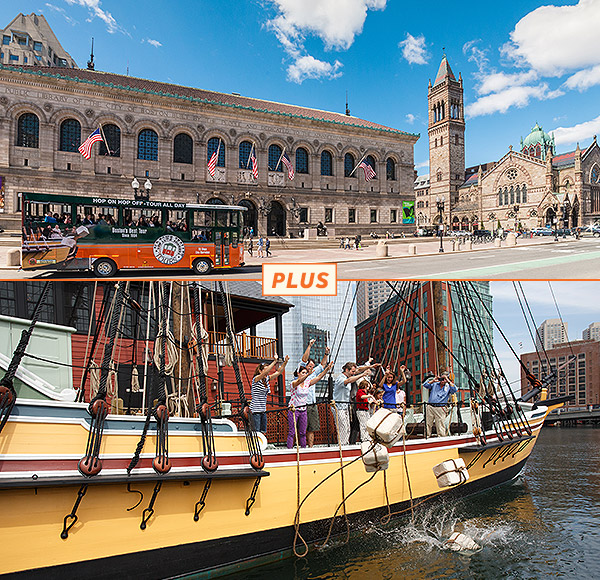
- Boston Tea Party Ships & Museum Ticket.
- Old Town Trolley Tour - 1 day of free unlimited re-boarding.
- $10 off Historic Harbor Cruise*
- $10 off Ghosts & Gravestones Tour*.
- $5 off Boston Summer Nights Tour & Charles River Cruise* (May 24 – Sept. 2, 2024)
- 50% off admission at The Sports Museum*
1-Day Old Town Trolley Tour
From
$49.83
Save up to 5%
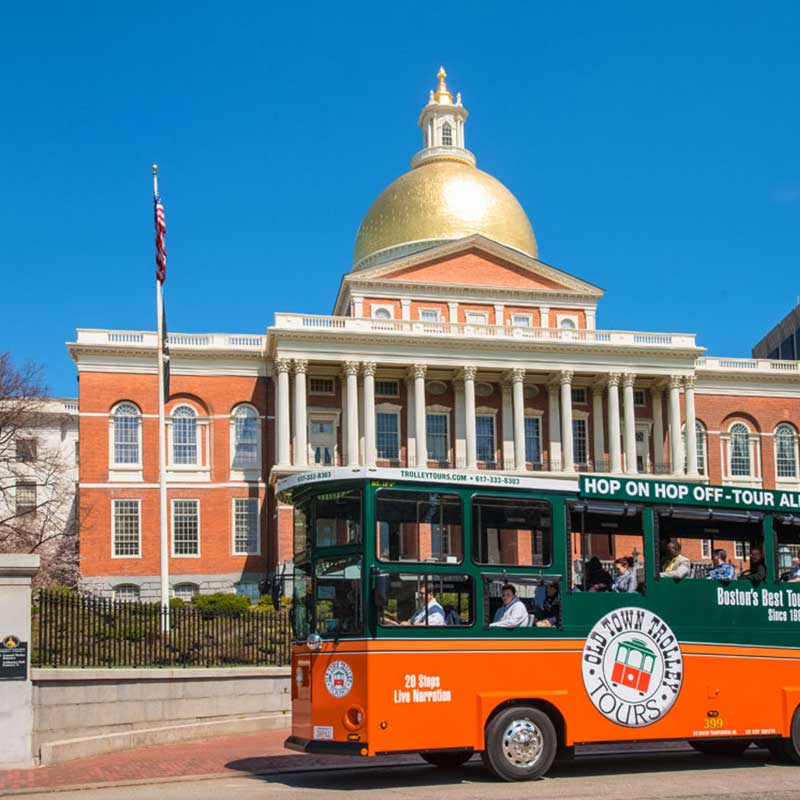
- 1 day of free unlimited re-boarding*.
- $10% off Historic Harbor Cruise*
- $10 off Ghosts & Gravestones Tour*.
- $6 off admission to Boston Tea Party Ships & Museum*.
- 50% off admission at The Sports Museum*
- $5 off Boston Summer Nights Tour & Charles River Cruise* (May 24 – Sept. 2, 2024)
- More than 100 points of interest.
Ghosts & Gravestones Tour
From
$44.48
Save up to 6%
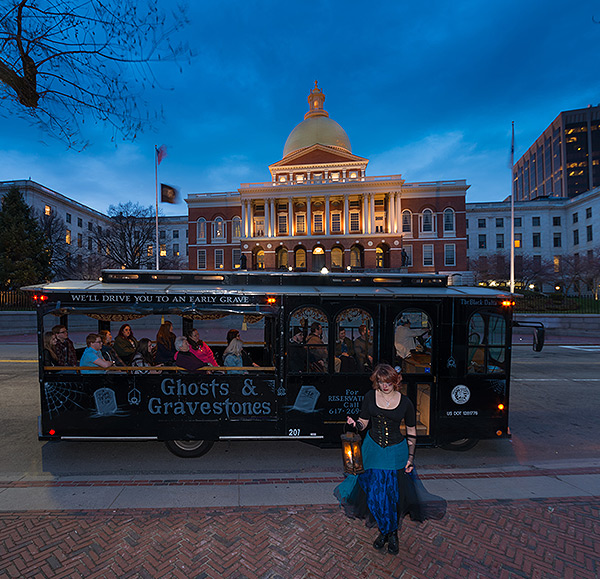
- Reservations are required.
- Explore some of Boston’s most haunted sites…
- Walk amongst the dead in burying grounds nearly 400-years-old.
- Exclusive night-time access into two of Boston’s oldest burying grounds.
- See Boston’s most haunted hotel: The Omni Parker House.
Boston Day and Night Tour Package
From
$89.15
Save up to 11%
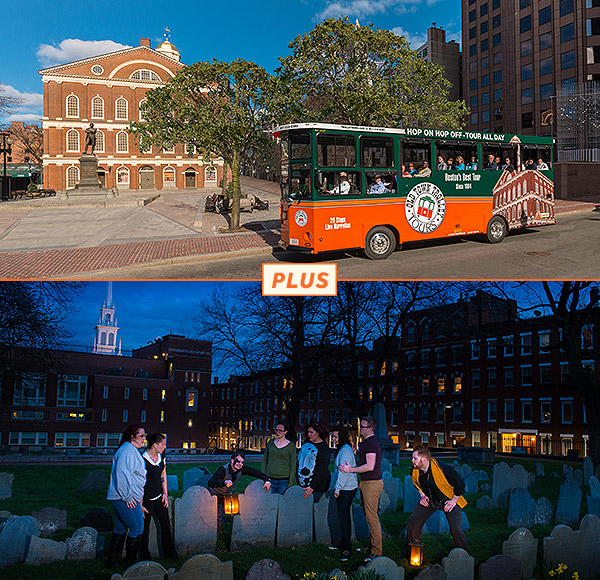
- Old Town Trolley Tours 1 day of free unlimited re-boarding*.
- Ghosts & Gravestones Night Tour**.
- $10 off Historic Harbor Cruise*
- $6 off admission to Boston Tea Party Ships & Museum*.
- 50% off admission at The Sports Museum*
- $5 off Boston Summer Nights Tour & Charles River Cruise* (May 24 – Sept. 2, 2024)
- More than 100 points of interest.
Prev
Next

School Field Trips & Group Tours
Play an active role in a riveting reenactment of the Boston Tea Party! It will be an experience you will never forget!
Learn More of School Groups
Shop Online
The Boston Tea Party Ships & Museum Gift Shop comes to you!
Shop Merchandise
SIGNUP FOR SPECIALS & DISCOUNTS
Sign up to receive special offers, discounts and news on upcoming events.