Who Was Really There?: A Historiography of Boston Tea Party Participant Lists
Who’s on the List?
Beginning in 2022, the Boston Tea Party Ships & Museum partnered with American Ancestors to create genealogical profiles for confirmed Boston Tea Party participants. The goal of this project was to create, as accurately as possible, a definitive list of those most likely to have accurate claims of participation in the Boston Tea Party while adhering to historical and genealogical standards.
This helped to create two different categories that we now use to classify those who appeared on lists, or in other sources as Boston Tea Party participants: Participant and Eyewitness to History. Since there are many claims of participation that are dubious, or only exist in family folklore, we wanted to differentiate between people who appear in multiple contemporary sources or made claims to participation prior to 1853, and those who only have folklore associations. This was in preparation for the launch of the Boston Tea Party Descendants Program, which launched in March 2023, on National Genealogy Day.
Boston Tea Party Participants who are listed on our Participants page are categorized as "men who were likely present on-board ships destroying tea on December 16, 1773." Anyone labeled as an Eyewitness to History is defined as "likely not aboard the ships on December 16, 1773, but have family lore associated with the event."
To make the decision of which names fit best in which category, we looked at the reigning contemporary sources that have been used by historians to match names. Eligible contemporary sources agreed upon between the Boston Tea Party Descendants Program and American Ancestors were the 1835 publication Traits of the Tea Party […] by Benjamin Bussey Thatcher, Tea Leaves by Francis S. Drake, published in 1884, and a primary source document compiled by Sarah Gammell, daughter of Boston Tea Party Participant John Gammell that was likely written in the 19th century according to the Houghton Library at Harvard University. While some contemporary sources used are from after 1853, these sources are used as a checking point on claims, alongside primary source material such as obituaries, newspaper articles, personal family records, census records, etc. to come as close as we can to an accurate list. Since the event that became known as the Boston Tea Party was largely sworn to secrecy by those involved, the list of participants may never be complete with 100% certainty, but using this framework allows us to get as close as possible in determining the validity of claims made by historians, descendants of those listed as having taken part in the Boston Tea Party, and the supposed participants themselves.
There are many different lists of men purported to be present destroying tea at Griffin’s Wharf on December 16, 1773. Of these lists, many are inconsistent, or contain conflicting information about the participants. But, taken together, these lists can give a clear picture of where the stories of participation originated, and help historians to better encompass a clearer picture of who may have actually been on Griffin’s Wharf that fateful evening in 1773.
Traits of the Tea Party [...]
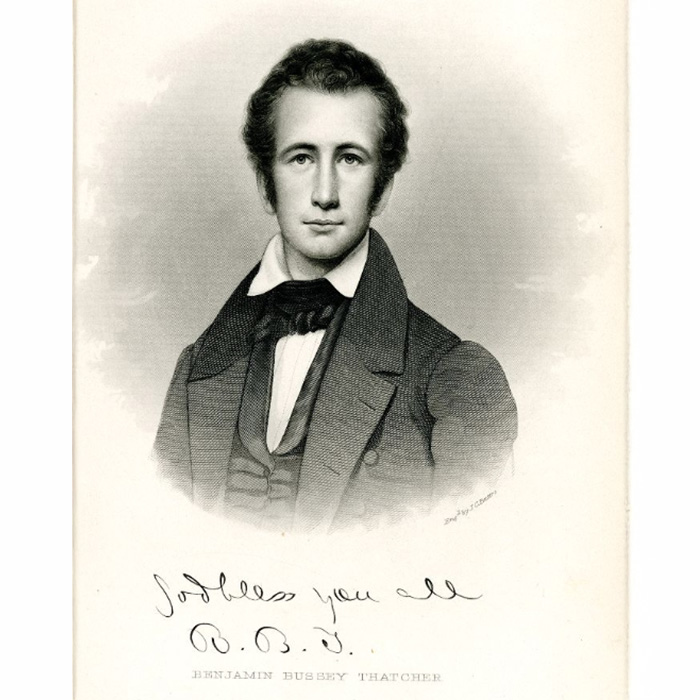
While there have been many claims of other lists existing, the first to be published was in author and historian Benjamin Bussey Thatcher’s book Traits of the Tea Party […], written in 1835, which contained a biography Boston Tea Party Participant George Robert Twelves Hewes (1742 – 1840). Hewes was a shoemaker in Boston in 1773 and lived to be 98 years old. During the later part of his life, Hewes became very vocal about his experiences during the American Revolution, and his participation in the Boston Tea Party.
Benjamin Bussey Thatcher was born in Warren, Maine on October 8, 1809, to Hon. Samuel Thatcher, who was a lawyer and Harvard graduate that represented Massachusetts in the United States House of Representatives from 1802-1805. Benjamin graduated from Bowdoin College in 1826, which was attended around the same time by famed American author Nathaniel Hawthorne.
Though Thatcher followed in the footsteps of his father and studied law, his true passion was in literature. He operated his law business in Boston, but he soon became a contributor to many publications, eventually authoring several books, including Traits of the Tea Party. In the preface of the book, Thatcher impresses upon the importance of preserving the history of the soldiers who fought in the American Revolution. Of Hewes, Thatcher wrote:
“The subject of the following memoir, it will be found, was engaged, with all the activity characteristic of his constitution of both mind and body, not only in the struggles of the seven- year's war, but in some of the most interesting of the events which preceded it immediately, and vividly illustrate its spirit, if they did not essentially co-operate (some of them certainly did,) in bringing it on. To have been, as he was, one of the members of the memorable " Tea-Party,"— but especially a principal actor in the scene, — would seem to promise a value for his biography almost peculiar to itself, since very few survivors of that transaction, besides himself, remain”
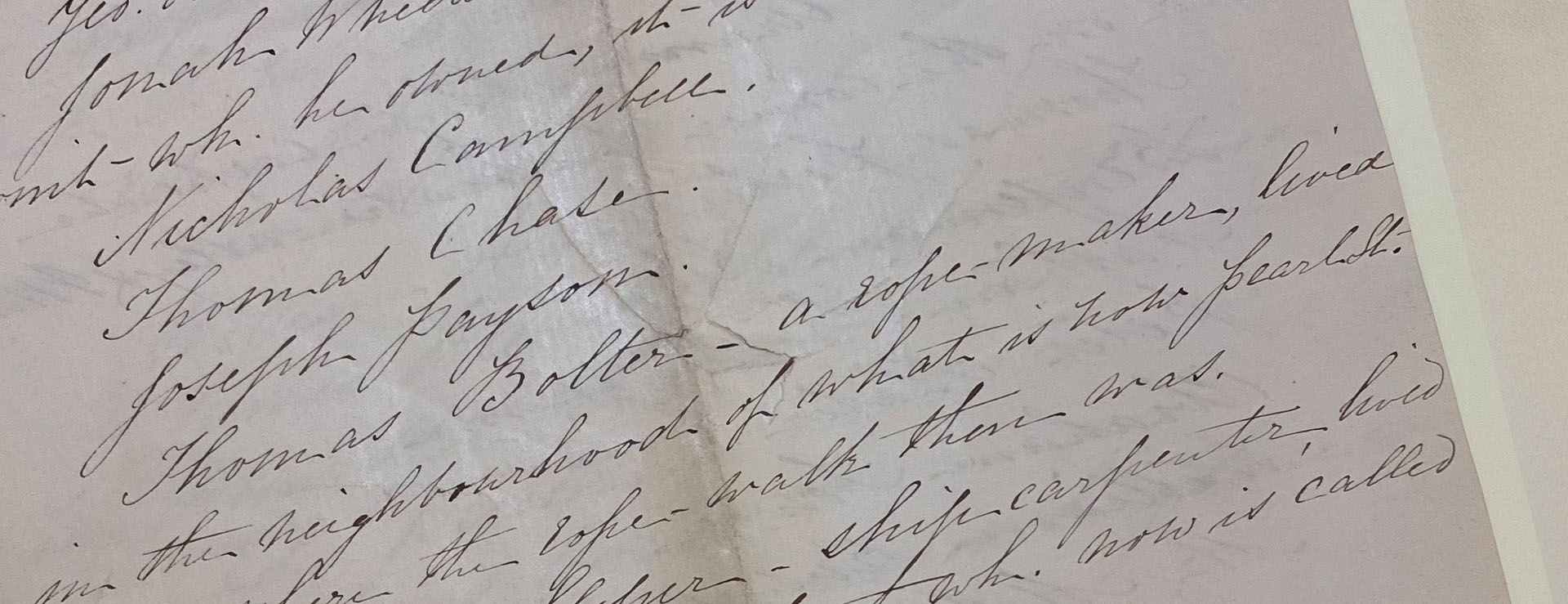
In the Appendix at the back of the book, there appears a list of names attributed to “an aged Bostonian,” though the author makes no claims of this list being attributed to Hewes, specifically. This list is comprised of 58 names in list form, with several others mentioned in the following paragraphs. While this is the first published list, it contains many names that are also featured on a manuscript document held at the Houghton Library at Harvard University. This document contains 57 names, almost all of which match with the list in the back of Thatcher’s book.
Sarah Gammell’s Letter
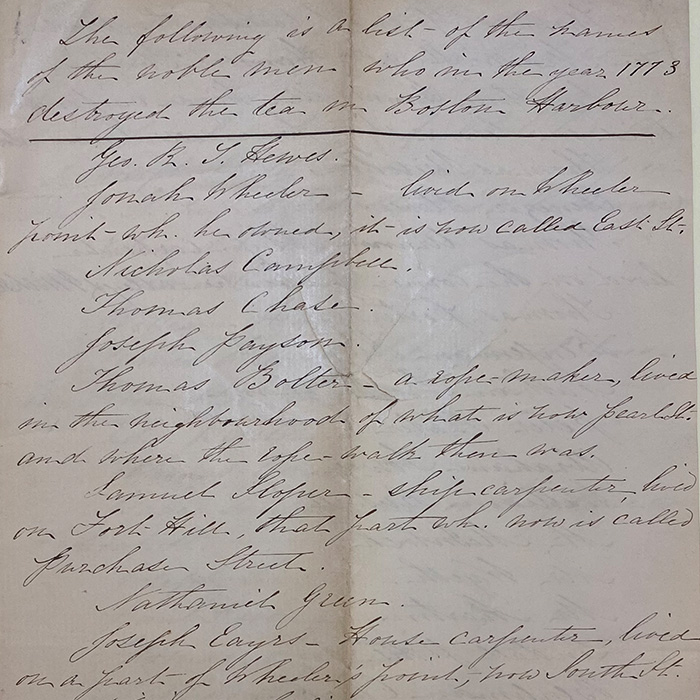
Sarah Gammell’s letter describing men her father, John Gammell, remembered being present when he took part in the Boston Tea Party is one of the only primary source lists of Boston Tea Party Participants that has been found. Though Houghton Library is unsure of the exact year of the letter, it had to have been written when Sarah Gammell was an adult. Sarah was born in 1799 and died in 1869. It is also likely, given the language she uses in the last page of the letter, that her mother, Margaret, was still alive when she wrote the list. Margaret Urann Gammell lived until 1830. While it is not certain the letter was written sometime between 1819-1830, it is a fair hypothesis. At the end of her letter when discussing her father, she writes:
“The destroying of the tea took place a few weeks after his marriage and I’ve heard mother tell of her anxiety on that night, and how she went home to her mother’s to await the return of her husband on that dreadful night, and they knew not if any would return alive. But they did, and father used, till the boys were grown up to have rehearsals of the whole scene, just as it had all been on that night.”
While Sarah Gammell’s letter does mix up a few details about participants such as places of residence, spelling of names, etc., the matches in descriptors with others in the Thatcher list in the appendix of Traits of the Tea Party are enough to be able to corroborate some early claims.
There are some participants who wrote, or had published their own individual recollections, such as Boston Tea Party participant Joshua Wyeth, a young blacksmith’s apprentice who had his account published in the Niles Weekly Register in 1826, but Thatcher’s list and the Sarah Gammell letter remain two of the most comprehensive lists of Boston Tea Party Participants pre-1853 to date.
Tea Leaves

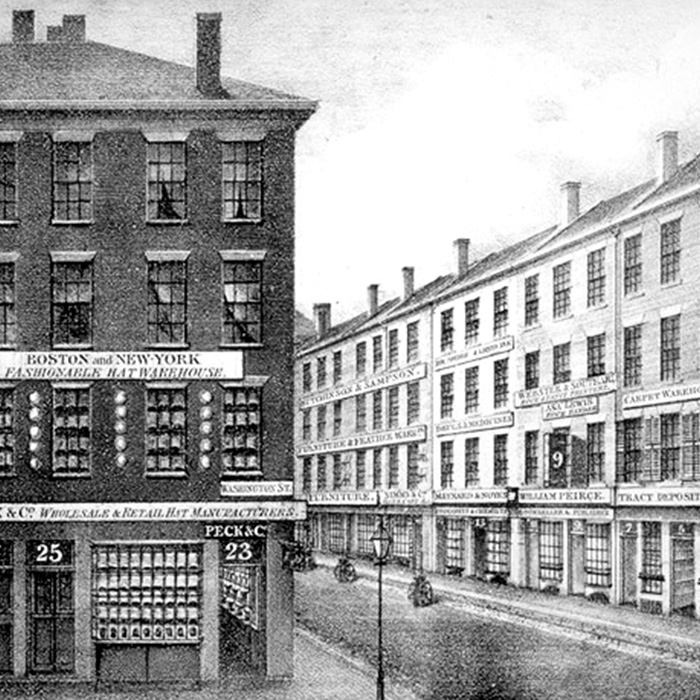
As stated above, when choosing sources to use for verifying Boston Tea Party Participants, decisions were made based on accuracy, historical usage, and other factors. One of these sources is Tea Leaves, published in 1884 by historian and author Francis S. Drake. Drake’s father, Samuel Gardner Drake (1798-1875), was a well-known antiquarian (an aficionado or student of antiquities or things of the past) who founded the first antiquarian bookstore in the United States, which was located at No. 63 Cornhill in Boston. While today that area now comprises City Hall Plaza, at its time of operation the bookstore was located in the epicenter of Boston’s revolutionary past, with Faneuil Hall right across the street. Samuel Gardner Drake was also one of the founders of the New England Historic and Genealogical Society (American Ancestors), which was founded in 1845. He later became one of its first Presidents in 1858-59.
His son Francis, born in 1828 in Northwood, New Hampshire, was educated in Boston’s public schools. After helping his father in the bookstore in Cornhill for a while, he went on to open his own bookstore in Leavenworth, Kansas for a time, before returning to Boston in 1867. Francis inherited his father’s taste for historical work and began publishing historical works of his own such as his Life of Gen. Henry Knox (1873), and The Town of Roxbury (1873), as well as preparing a Dictionary of American Biography in 1872, the materials for which took him 20 years to collect.
In 1884, he used his biographical collections and expertise to compile and curate materials illustrating the importance of the Boston Tea Party in his work Tea Leaves which included short biographical paragraphs of all the “known” participants that Drake could compile at the time. Many of these names match with the list in the back of Thatcher’s 1835 book, and while some information conflicts, Tea Leaves remains one of the first sources most historians reach for when studying the history of how the Boston Tea Party story is told.
A Note on the “Long Room Club”
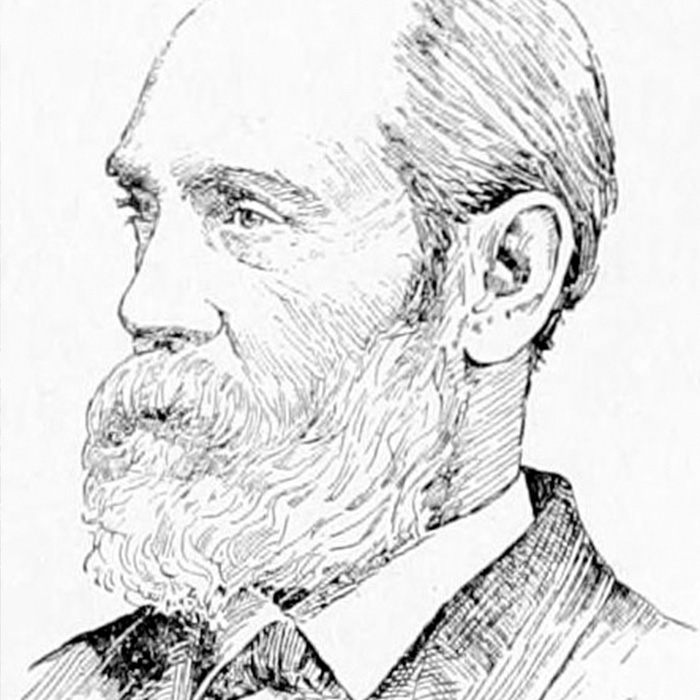
The Long Room Club is a bit of a mystery to decipher. There are three official sources, none of them first-hand accounts of the existence of this organization. The first is Reminiscences & Traditions of Boston, by Hannah Mather Crocker, written in 1829. The second is Samuel Adams Drake’s Old Landmarks and Historic Personages of Boston, written in 1873. The third is Tea Leaves, written by Francis S. Drake in 1884.
The Long Room club was supposedly founded by Samuel Adams in 1762. Its location is not known. Both authors state that, “The long room over the printing office was devoted to the use of a political society.” Crocker implies this to be the printers Green and Russell, who published the Boston Post-Boy until 1773. However, Drake believes this to be the Boston Gazette, published by Edes and Gill. The only for sure fact is that the Long Room does not refer to the Green Dragon Tavern, as that was the meeting place of St. Andrews Lodge. Members of this elusive organization allegedly included Samuel Adams, John Hancock, Dr. Joseph Warren, James Otis, Benjamin Church, Samuel Dexter, Dr. Samuel Cooper, and Mr. William Cooper, Thomas Dawes, Samuel Phillips Savage, Royal Tyler, Paul Revere, Thomas Fleet, John Winthrop, William Molineux, and Thomas Melvill. Melvill’s addition is odd, as he would have only been 11 years old when the group was founded, and wasn’t an influential figure among the Whigs of Boston.
According to Drake and Crocker, the Long Room Club played a significant role in the planning of the Boston Tea Party. They would dissolve in 1774 after several of their members were accused of treason and fled Boston. There is very little information about this club, and its existence may never be confirmed.
Modern Sources
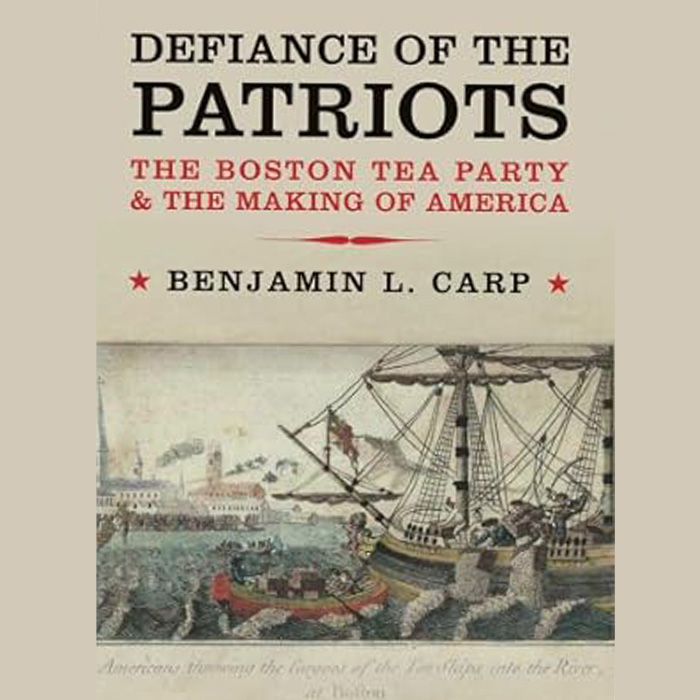
Other organizations such as the National Society for the Daughters of the American Revolution, the National Society for the Sons of the American Revolution, The Society of the Cincinnati, and other lineage organizations have tried to make their own lists over the years, as well as many modern authors. One such author is Benjamin L. Carp, whose book Defiance of the Patriots, published in 2010, remains the most up to date attempt at a list
of participants using many of the above-named sources, as well as work by other historians who have done the work of trying to narrow down who may have been on Griffin’s Wharf in 1773.
If you would like to learn more, you can purchase your own copy of Defiance of the Patriots here. Members of the Boston Tea Party Descendants Program get discounts on the online store.
